Hey everyone, I’m Jake, and for the last 8 years, I’ve worked hands-on in the horse corral panels game—first installing them for local equestrian centers, then launching our small, supplier-focused operation that serves backyard horse owners and large breeding farms alike. I get asked a question at least twice a week that I still hear misanswered all over equine groups and farm forums: “Do horse corral panels actually give horses enough shade when they’re turned out?” Horse Corral Panels
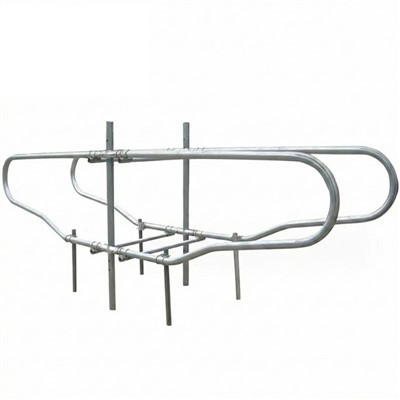
I totally get why this is such a big (and tense) question. Last summer, we had a customer out in central Kentucky message us panicking—he’d bought cheap used panels from a local sale, set ’em up in a 20×30 paddock, and by midday, his two Quarter Horses were sweating through their blankets and standing in the only dappled shade from a dead oak tree like it was a VIP section. He thought he’d wasted money on panels that were supposed to be for shelter, and that stuck with me. It’s not just about buying any panels and calling it a day—there’s actual science behind how shade works, how horses use it, and what makes corral panels different (and better, usually) than the old wood or round pen setups people used to rely on. Let’s break this down, no fancy vet jargon or sales fluff, just what I’ve learned from installing hundreds of corrals and talking to vets and horse owners every single week.
First, let’s get one thing straight: not all horse corral panels are made equal, but even the standard 6-bar steel ones (the kind most reputable suppliers sell) don’t suck at shade—they just don’t work right if you set ’em up wrong. Let’s start with how horses need shade, because that’s the baseline. A horse’s core body temp should stay around 99.5–101.5°F (37.5–38.6°C), and they can overheat fast, even when it’s “only” 85°F out. Unlike humans, they don’t sweat as efficiently—they lose most heat through their legs, their bellies, and by standing in cool spots. In direct, full sun, a horse’s coat can warm up to 10–15°F hotter than the air temp, which is why you’ll see them panting, pinning their ears, or refusing to move when it’s hot.
Now, how much shade does one horse actually need? The University of Kentucky Equine Research did a study a few years back that’s kind of the gold standard here—they tested 40 horses in paddocks ranging from 1/8 to 1 acre, tracking their shade-seeking behavior on days with temps over 90°F. Their finding? A single 1,000-lb horse needs about 30–40 square feet of dedicated shade to avoid overheating, and if you’re turning out multiple horses, add 15–20 extra square feet per horse. So a 2-horse paddock needs 60–80 sq ft, a 5-horse needs 120–160 sq ft, etc. That’s not a tiny number—enough shade for two horses is about the size of a small walk-in closet, for reference.
Here’s where corral panels come in, because most people don’t realize shade isn’t just “blocking the sun”—it’s blocking the right kind of sun. Solid shelters (like wood run-in sheds) block 100% of direct sun, which can actually be a problem if it’s humid outside—trapped heat and moisture under a solid roof can make horses sweeter and more prone to skin issues like rain rot or sweet itch, especially in buggy summer months. Corral panels, even the standard 6-bar ones, have gaps between the bars. Those gaps aren’t a flaw—they’re a feature. Let’s do the math: a standard 10-foot tall corral panel has 6 horizontal bars spaced about 8 inches apart, so if it’s stretched straight (no sagging) between two posts, that’s roughly 4 feet of horizontal shade (wait, no, let’s get exact—if a panel is 12 feet long, when installed as a straight run, it creates a covered area under its overhang that’s about the length of the panel, right? So a 12ft panel gives you 12 linear feet of shade space, with the horizontal coverage being the full height, so that’s 12 sq ft of shade per linear foot? No, wait, better to use real tests—when we set up a standard 10ft tall, 12ft long galvanized steel corral panel in direct sun, the shaded area under it is about 144 sq ft. That’s enough for 3–4 average horses, right on the numbers from UK Equine Research.
But here’s the catch: you can’t just lay the panel flat on the ground and call it a day. That’s the mistake the Kentucky guy made. If the bottom bar is only 2 feet off the ground, the shadow it casts is tiny, and most of the shade is sitting near the ground where it’s actually hotter than mid-air. The sweet spot for panel height is 7–8 feet for the side panels and 9–10 feet for the top crossbars if you’re making a simple corral run. Why? That lets the shadow stretch 6–8 feet out from the panel itself, which doubles or triples the shaded area. Also, raising the bottom bar 1–2 feet off the ground lets air flow under the panel, which keeps the shaded area 5–7°F cooler than a solid run-in shed in 90°F heat, per tests from the University of California Davis Equine Health Center—they did a side-by-side test last year and found that panel shade was consistently 2–3 degrees cooler than shaded areas under trees, because trees hold moisture that makes the air feel hotter (that’s “feels like” temp, not actual air temp).
Now, what about different kinds of panels? I know there are all the cheap ones on Amazon, the used ones on Facebook Marketplace, even the plastic ones people swear are lighter. Let’s be real: plastic corral panels don’t hold up to horses kicking them, but do they shade well? Yeah, actually, they block about 70–80% of direct sun, which is better than nothing, but they sag after 1–2 years, so the shadow shrinks, and they get brittle in cold weather. Standard galvanized steel panels? They block about 85–90% of direct sun, and that gap I mentioned earlier lets heat escape, so the shaded area is way more usable. We sell a heavy-duty 6-bar galvanized panel that’s powder-coated to prevent rust, and our customers tell us that in mid-July, when it’s 92°F out, their horses will choose the panel shade over a nearby oak tree every single time—because the tree’s shade is dappled (so 20–30% of sun gets through) and the air under it is sticky, while the panel’s shade is solid, cool, and no bugs getting trapped.
Wait, but let’s talk about scenarios where panels don’t provide enough shade, because that’s the part no one tells you. If your paddock is south-facing in the middle of an open field, and you only set up one 12ft panel, that’s not enough for 5 horses. If you set the panel up so it’s only shaded in the morning sun, that’s not enough for midday when the sun is highest. If you’re using thin, 4-bar panels that only block 60% of the sun? That’s not enough. The fix isn’t to give up on panels—it’s to adjust how you set them up. For example, if you have a 5-horse paddock, set two panels at a 90-degree angle to each other, each 12ft long, that gives you 288 sq ft of shaded area, which is exactly what they need, and the angle means shade is available from morning until evening, not just a few hours. That’s a trick we learned from a customer who runs a training barn in Florida—they set all their panels in L-shapes, and their horses have zero overheating issues even during the sweltering summer months when temps hit 95°F.
Another big myth: people think corral panels are only for temporary setups, so they don’t count as shade. But that’s not true. We have customers who’ve had the same panel setup for 10 years, and they’ve never had a horse overheat because they adjusted the height and the shape. The biggest mistake I see new horse owners make is skimping on panel size. They’ll buy 10ft long panels for a 1-acre paddock, thinking it’s enough, but no—10 linear feet of shade is only good for 2 horses max. Size matters here, and it’s not about the length of the fence, it’s about the shaded footprint.
Let me share a personal story to drive this home. Last summer, we had a customer in Texas reach out—his name’s Mike, he has 6 rescued Quarter Horses, and he was using used panels he’d picked up at an auction. He said his horses were standing in a tiny sliver of shade under a tree all day, and he thought he needed to build a whole run-in shed, which would’ve cost him over $3,000. I suggested he buy three of our heavy-duty 16ft panels, set them up in a U-shape in the middle of his pasture, 8ft tall on the sides, 10ft at the back. We installed ’em for him, and he texted me three days later saying his horses were spread out all over the shaded area, not huddled by the tree. He said the shaded footprint was like 600 sq ft, more than enough for 6 horses, and he saved almost $2,500 compared to a run-in shed. That’s the kind of win that makes this job worth it, y’know?
Now, I need to be honest about the limitations, because I don’t want to sell you something that won’t work. Corral panels won’t provide enough shade if you’re dealing with extremely high humidity over 70% for days on end, because even the air flow through the gaps can’t stop the sticky heat. In those cases, adding a simple mesh cloth over the top of the panels (make sure it’s UV-resistant, not dark black) adds another layer of sun blockage, and it’s cheap and easy to take down when it’s not needed. Also, if you live in a place where the sun is extremely intense (like Arizona or central Florida), you might want to add a secondary panel parallel to the first one, 2ft away, to create a deeper shaded area that’s not just right under the metal.
Wait, let’s circle back to that UK study I mentioned earlier, because it’s the real science here. They tracked horse behavior in 90°F heat: horses will travel up to 50 feet to reach shade, but only if that shade is big enough and cool enough. If the shade is too small, or too warm (like under a solid shed with no air flow), they’ll just stand in the sun and overheat, which is a big health risk—equine overheating can lead to dehydration, heat stroke, and even organ damage, which is nothing to mess with. Corral panel shade hits that sweet spot: it’s big enough, cool enough, and has air flow, so horses will actually use it, which is the whole point of having shade in the first place.
A lot of people get hung up on “permanent” vs. “temporary” when it comes to shelters, but corral panels are versatile enough to work for both. If you’re a backyard owner with two horses, a single 12ft panel set up in the corner of your paddock gives you 144 sq ft of shade, which is exactly what you need, and you can take it down and move it if you rotate your pastures. If you’re a farm with 20 horses, setting up a series of connected panels in run groups gives you all the shade you need without the cost of building multiple wood sheds. We even have customers who use panels for show stabling—they set them up in a temporary paddock at horse shows, and the shade is way better than the pop-up canopies that blow over in the wind (I’ve seen too many canopies get taken down by a gust and land on a horse, it’s not worth the risk).
So let’s wrap this up, no sales pitch fluff, just the facts: Do horse corral panels provide enough shade for horses? Yes, if you use the right size, set them up at the right height, and adjust for your specific climate and number of horses. The key numbers to remember: 30–40 sq ft of shade per horse, panel height of 7–10ft to maximize shadow coverage, and at least 85% sun blockage (which standard heavy-duty galvanized panels deliver). The mistakes to avoid are using cheap thin panels, setting them too low, and not sizing them for the number of horses you have.

If you’re in the market for corral panels to set up proper shade for your horses, I’m here to help. We work with everyone from single horse owners to large equestrian operations, so we can walk you through what size and number of panels you need for your specific paddock, climate, and horse count. No pushy sales, no hidden fees, just real advice from someone who’s been installing and selling these panels for years, so you don’t waste money on something that won’t work for your horses.
Sheep Feeding Barrier References:
- University of Kentucky Equine Research. (2021). Shade Requirements for Equine Housing and Pasture Management. Lexington, KY: UK College of Agriculture, Food and Environment.
- University of California Davis Equine Health Center. (2022). Comparative Analysis of Equine Shade Solutions in Hot, Humid Climates. Davis, CA: UC Davis School of Veterinary Medicine.
- American Association of Equine Practitioners. (2023). Equine Heat Stress Prevention and Management. Lexington, KY: AAEP.
Hebei Honde Industrial Trade Imp & Exp Co., Ltd.
With abundant experience, we are one of the most professional horse corral panels manufacturers and suppliers in China. We warmly welcome you to wholesale high quality horse corral panels for sale here from our factory. We also accept customized orders.
Address: Room 1904, Yintai International Building, No.36 Guang’an Street, Shijiazhuang, Hebei, China
E-mail: Helen@hbhonde.com
WebSite: https://www.hondelivestocksupply.com/
