Can a DC Hipot Test Set be used for testing resistors?
If you’re in the manufacturing or quality testing space, you’ve probably run across DC Hipot test sets before. You might also be wondering, can this piece of equipment—usually associated with high-potential insulation testing—actually work for testing resistors? As a supplier who’s talked to hundreds of engineers and production managers over the years, this question comes up more than you’d think. Let’s break it down without getting too bogged down in jargon, so you can make the right call for your testing needs. DC Hipot Test Set
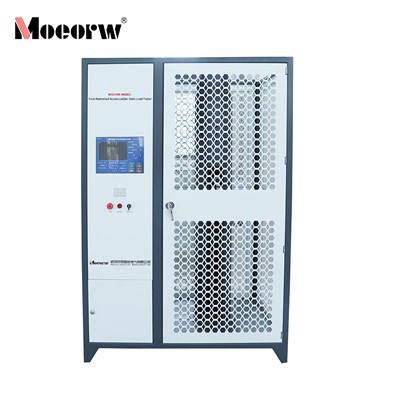
First, let’s start with what a DC Hipot test set does at its core. Hipot, short for high potential, is a test designed to check the integrity of insulation materials. It sends a high direct current voltage (usually ranging from a few hundred volts to tens of thousands of volts) between two conductors separated by insulation, measuring how much current leaks through that insulation. If the insulation is good, the leakage current stays tiny—often just microamps. If there’s a flaw, like a crack or thin spot, the leakage current jumps, and the test set triggers a fault. That’s the basics of its primary job, but that doesn’t mean it can’t overlap with resistor testing.
Resistor testing, on the other hand, is all about measuring the ohmic value of a resistor—how much it opposes the flow of current. The standard way to do this is with an ohmmeter or multimeter, which uses a low test voltage (typically 1.5V to 9V) to pass a small current through the resistor and calculate resistance from Ohm’s Law (R = V/I). But not all resistors are the same. There are power resistors that handle kilowatts of heat, high-voltage resistors used in power grids or medical devices, and precision resistors for electronics. Each of these has unique testing requirements that might make a DC Hipot set useful, at least in some scenarios.
So, can you use a DC Hipot set to test resistors? The short answer is: sometimes, but it depends on what you’re testing and what you want to measure. Let’s look at the cases where it works, the limits, and why you’d pick a Hipot set over a standard ohmmeter (or vice versa) for resistor testing.
First, when a DC Hipot test set is a great fit for resistor testing. Let’s talk about high-voltage resistors, for example. A resistor rated for 10,000 volts isn’t just there to have a certain ohmic value—it has to handle that voltage without breaking down. If you use a standard multimeter to test a 10MΩ high-voltage resistor, it will work, but it won’t tell you if the resistor’s insulation can actually withstand the voltage it’s rated for. The multimeter’s low test voltage can’t simulate the real operating conditions the resistor will face. A DC Hipot set, though, can apply the rated voltage (or a slight overvoltage, as is common in quality testing) across the resistor, and measure both its ohmic value and its leakage current at that high voltage.
Wait, let’s clarify that. When you connect a resistor across the two terminals of a DC Hipot set, you’re not just testing insulation here—you’re testing the resistor’s ability to maintain its ohmic value under the voltage it’s designed for. For precision resistors, their tolerance (how close they are to their labeled resistance) can shift when subjected to high voltages. For example, a carbon composition resistor might have a 5% tolerance at low voltage, but at its rated 5kV, that tolerance could jump to 10% if the material is starting to break down internally. A standard multimeter can’t catch that, because it only uses a tiny voltage to measure resistance. A DC Hipot set, though, can apply the full operating voltage, measure the current through the resistor, and calculate the resistance at that voltage. That’s a big advantage for manufacturers of high-voltage resistors, which is a market we work with a lot.
Another case: testing power resistors. Power resistors are used in applications like braking systems for electric vehicles, where they might dissipate hundreds of watts. When they’re operating, they get hot, and their resistance changes with temperature. But they also have to handle peak voltage surges—way higher than their normal operating voltage. A DC Hipot set can simulate those surge voltages, and while doing so, measure the resistor’s resistance under both normal and surge conditions. This helps manufacturers verify that the resistor won’t drift outside its specified range even under extreme stress. For example, if you’re producing a 100Ω power resistor rated for 5kV surges, using a Hipot set to test it at 5kV will confirm that the resistance stays at 100Ω ± 5%, as opposed to a multimeter which would only measure that value at a tiny voltage.
Now, let’s talk about the limits. This is where things get tricky, because a DC Hipot set isn’t a replacement for a dedicated resistor tester. First, standard DC Hipot sets are designed for insulation testing, so their precision for measuring low ohmic values isn’t as good as a dedicated ohmmeter. Let’s say you have a 1Ω power resistor. A standard multimeter will measure that with ±0.5% accuracy, but a basic Hipot set might only have 5% accuracy for current measurements at high voltage, so your calculated resistance would be much less precise. For low-value resistors, that’s a problem.
Second, DC Hipot sets measure leakage current in microamps, which is fine for insulation, but if you’re testing a high-value resistor (like 10MΩ or more), the current through the resistor at high voltage is small—usually just microamps too. That means you have to make sure the Hipot set’s current measurement range is accurate for those low microamp values. If the set’s lowest current range is 1mA, it can’t accurately measure a 1μA current through a 10MΩ resistor at 10kV, so your resistance calculation would be way off. That’s a key point: you need to check the Hipot set’s specs before using it for resistor testing.
Another limit: some resistors are non-linear. Semiconductor resistors, like thermistors or varistors, don’t follow Ohm’s Law across all voltages. Their resistance changes in a non-linear way as voltage increases. A standard ohmmeter uses a low voltage, so it measures the resistance at that low point, but a DC Hipot set applies a high voltage, which might give a different reading that doesn’t represent the resistor’s behavior in normal use. For these types of resistors, a Hipot test isn’t a good way to measure their nominal resistance—it’s just a stress test, not a precise measurement.
Now, let’s talk about how to actually use a DC Hipot set for resistor testing, if you decide that’s the right approach. First, make sure you’re using a DC Hipot set that has a stable, regulated output voltage. Unregulated sets can have voltage fluctuations, which will throw off your resistance calculations. Second, measure the current through the resistor accurately. Most DC Hipot sets have a built-in leakage current meter, but you should verify that the current measurement is in the range of what you expect for your resistor. For a 10MΩ resistor at 10kV, the current is I = V/R = 10,000V / 10,000,000Ω = 0.001A, or 1mA? Wait, no, 10,000 divided by 10 million is 0.001? Wait, 10 million ohms is 10 kilo-ohms? No, wait, 1 megaohm is 1 million, so 10 megaohm is 10 million. So 10,000V divided by 10,000,000Ω is 0.001 amps, which is 1 milliamp. Oh, right, so that’s a milliamp, which is within the range of most Hipot sets. But if you have a 100MΩ resistor at 10kV, that’s 0.1mA, which is 100 microamps, so you need a Hipot set that can measure down to 100 microamps accurately.
Third, set the test time correctly. Hipot tests usually have a test time of 1 to 60 seconds, depending on the standard. For resistor testing, you want to apply the voltage long enough for the current to stabilize, but not so long that you damage the resistor. Most resistors have a maximum power rating, so the power dissipated during the test is P = V²/R. For a 10MΩ resistor at 10kV, power is (10,000)² / 10,000,000 = 10,000,000,000 / 10,000,000 = 1000 watts. Wait, that’s a lot! Oh, right, so you can’t apply 10kV to a 10MΩ resistor that’s only rated for 1 watt. That would destroy it instantly. So power is a critical factor here. You have to make sure the power you’re applying during the Hipot test is less than the resistor’s rated power. That’s a mistake a lot of people make when they first try this—they think because the voltage is high, the power is low, but for high-value resistors, power can be surprisingly high.
Let me give you a real example from a customer I worked with last year. They were a manufacturer of high-voltage resistors for electric vehicle charging stations. They were testing each resistor with a standard DC Hipot set, and they were using the leakage current reading to also confirm the resistor’s value. But they were having a lot of rejects for “high leakage current,” which their multimeter didn’t catch. When we looked into it, we realized their resistors were rated for 5kV, and they were testing at 5kV. The leakage current for a good 10MΩ resistor at 5kV was 0.5mA, which is a small current, but because their Hipot set’s current measurement was accurate, it worked. But they were also testing a 100kΩ resistor for a different application, and at 5kV, the current was 50mA, which is way more than the resistor’s 5W rating. They were destroying perfectly good resistors because they didn’t calculate the power. Once we adjusted their test voltage for the 100kΩ resistor to 500V, the power was only (500)² / 100,000 = 2.5 watts, which is under the 5W rating, and the current measurement was accurate enough to confirm the resistor’s value. That’s a perfect example of how it works when you do it right, and how it goes wrong when you don’t.
Another example: medical device manufacturers. Many medical devices use resistors in high-voltage circuits, like defibrillators. Defibrillators need resistors that can handle very high voltage surges, and their reliability is critical. A standard multimeter test can’t simulate the surge voltage a defibrillator resistor will face, so using a DC Hipot set to apply a surge voltage and check both insulation integrity and resistance stability is a common practice here. It helps catch resistors that might have a good ohmic value at low voltage, but have internal flaws that cause the resistance to shift or insulation to break down when exposed to real-world conditions.
Now, let’s talk about when a DC Hipot test set is not a good choice for resistor testing. If you’re testing low-value resistors (like 1Ω or less) with high precision needs, a dedicated ohmmeter is better. Low-value resistors have very low resistance, so the current through them at high voltage would be extremely high—way more than their power rating. For example, a 1Ω resistor at 100V would have 10,000 watts of power, which is impossible to dissipate without destroying the resistor. So you can’t use a Hipot set to test low-value resistors, because the power would be too high. For those, stick with a multimeter or milliohmmeter.
Also, if you need a precise measurement of a resistor’s nominal value (like for a precision 1kΩ resistor used in a sensor), a DC Hipot set isn’t the way to go. Precision resistors have tight tolerances (often 0.1% or better), and most DC Hipot sets only have a tolerance of 1% or more for resistance calculations. A dedicated precision ohmmeter will give you a much more accurate reading. The Hipot set is more for stress testing and verifying behavior under operating conditions, not for precise nominal value measurement.
As a DC Hipot test set supplier, we often get asked if we recommend our sets for resistor testing. Our answer is: it depends on your application. If you’re testing high-voltage resistors, power resistors, or need to verify resistance stability under high voltage or surge conditions, a Hipot set can be a valuable addition to your testing process. It lets you combine insulation testing and resistor performance testing in one piece of equipment, which saves you time and money on separate testers. But if you’re testing low-value, low-voltage, or precision resistors, stick with dedicated resistor test equipment.
We also make sure to educate our customers on the best practices for using Hipot sets for resistor testing, so they don’t make the mistakes my EV charging customer did last year. That includes checking power ratings, verifying current measurement accuracy, and making sure the test voltage is appropriate for the resistor’s rating. We even have custom configurations for some of our customers that combine the Hipot test with a resistance measurement function, so they can get both readings in one step.
One thing to keep in mind: many international standards relate to both Hipot testing and resistor testing, so if you’re manufacturing components for export, you need to make sure your test method complies with those standards. For example, IEC 60060 is the standard for high-voltage testing, which includes Hipot tests, and IEC 61180 is for resistors. When you use a DC Hipot set for resistor testing, you have to adjust your test parameters to align with these standards to ensure compliance. That’s another reason why working with a supplier who understands both types of testing is helpful—we can walk you through the requirements to make sure you’re meeting industry standards.
Let’s wrap this up. So, can a DC Hipot test set be used for testing resistors? The answer is yes, in specific scenarios: when testing high-voltage resistors, power resistors, or when you need to verify resistor performance under high voltage or surge conditions. It’s not a replacement for dedicated resistor testers, but it’s a complementary tool that can save time and improve quality by combining insulation and performance testing.

If you’re considering using a DC Hipot test set for resistor testing, or if you want to learn more about how our test sets can work for your specific resistor testing needs, we’re here to help. We’ve worked with manufacturers across industries to design test solutions that fit their unique requirements, and we can guide you through the right setup for your resistors. Don’t hesitate to reach out to discuss your testing challenges, so we can find the best solution for you.
Turn-to-turn Tester References:
- IEC 60060-1:2010, High-voltage test techniques – Part 1: General definitions and test requirements
- IEC 61180-1:2014, Resistors for use in electronic equipment – Part 1: Generic specification
- ASTM D149-21, Standard Test Method for Dielectric Breakdown Voltage and Dielectric Strength of Solid Electrical Insulating Materials at Commercial Power Frequencies
- National Electrical Manufacturers Association (NEMA) Standards for High-Voltage Resistors, Publication No. HVRS-1-2019
Wuhan Moen Intelligent Electric Co., Ltd.
As one of the most professional dc hipot test set manufacturers in China, we’re featured by quality products and good price. Please rest assured to buy high quality dc hipot test set in stock here and get quotation from our factory. Customized orders are welcome.
Address: Building A, No.1, Fenghuangyuan 2nd Road, Donghu New Technology Development Zone, Wuhan, Hubei, China
E-mail: info@hvhipotsystem.com
WebSite: https://www.hvhipotsystem.com/
