Hey there! I’m part of a crew that supplies Underground Nets. You might be wondering, "What are the wireless standards for an Underground Net?" Well, let’s dive right in and break it down. Underground Net

First off, we gotta understand the unique challenges of an Underground Net. Unlike regular above – ground networks, underground environments are full of obstacles. There are rocks, soil, and all sorts of structures that can mess with wireless signals. So, the wireless standards we use need to be tough and reliable.
One of the key standards we often look at is ZigBee. ZigBee is a low – power, wireless mesh networking standard. It’s great for underground because it can form a self – healing network. What does that mean? Well, if one node in the network fails or gets blocked by something underground, the network can automatically find a new path for the data to travel. This is super important in an underground setting where things can change all the time, like when there’s a small cave – in or some equipment is moved around.
ZigBee operates in the 2.4 GHz, 915 MHz, and 868 MHz frequency bands. The lower frequency bands, like 915 MHz and 868 MHz, are especially useful underground. Signals in these bands can penetrate through soil and rocks better than higher frequency signals. They have a longer wavelength, which means they can bend around obstacles more easily. For example, if there’s a big rock blocking the direct path between two nodes, a 915 MHz signal can still find a way around it.
Another standard that we consider is LoRaWAN (Long Range Wide Area Network). As the name suggests, it’s designed for long – range communication. In an underground net, we might have sensors and devices spread out over a large area. LoRaWAN can connect these devices over distances of several kilometers, even underground.
LoRaWAN uses a chirp – spread – spectrum modulation technique. This makes the signals more resistant to interference. In an underground environment, there are all kinds of electrical and electromagnetic interferences from mining equipment, power cables, and other sources. The chirp – spread – spectrum modulation helps the LoRaWAN signals cut through this noise and reach their destination.
It also has a low power consumption, which is crucial for underground devices. Many of the sensors and nodes in an Underground Net are battery – powered. We don’t want to keep changing batteries all the time, especially when they’re buried deep underground. LoRaWAN’s low power requirements mean that the devices can last for months or even years on a single battery charge.
Wi – Fi is another well – known wireless standard, but it has its limitations in an Underground Net. Wi – Fi typically operates at 2.4 GHz or 5 GHz frequencies. The 5 GHz frequency has a shorter range and is more easily blocked by obstacles. Even the 2.4 GHz band can have problems penetrating through thick layers of soil and rock. However, in some cases where the underground space is relatively open and close to the surface, Wi – Fi can be used for local communication between devices. For instance, in a large underground storage facility with a relatively clear line of sight between nodes, Wi – Fi can provide fast data transfer speeds.
Z – Wave is yet another option. It’s a low – power wireless standard mainly used for home automation and small – scale networks. In an underground context, it can be used for controlling and monitoring small – scale systems, like ventilation controls or lighting in a small underground bunker. Z – Wave operates at a frequency of around 908.42 MHz in the United States and 868.42 MHz in Europe. These frequencies are similar to the lower – frequency ZigBee bands, which gives them good penetration capabilities.
Now, let’s talk about the importance of compatibility. When we’re setting up an Underground Net, we need to make sure that all the devices are compatible with each other. We don’t want to have a bunch of devices that can’t talk to each other just because they use different wireless standards. That’s why we often use gateways. A gateway is like a translator between different wireless standards. It can take a signal from a ZigBee device, convert it into a format that a LoRaWAN device can understand, and vice versa.
Interoperability is also a big deal. We need to ensure that the different wireless standards can work together smoothly in the same underground environment. For example, if we have a ZigBee – based sensor network and a Wi – Fi – enabled monitoring station, they should be able to communicate without any glitches. This requires careful planning and testing during the installation and configuration process.
Security is another crucial aspect. In an underground net, we’re often dealing with sensitive data, like the status of mining operations or the environmental conditions in a cave. Hackers could potentially try to access this data, so we need to have strong security measures in place. Most of the wireless standards we use, like ZigBee and LoRaWAN, have built – in security features such as encryption. Encryption scrambles the data so that even if a hacker intercepts the signal, they won’t be able to read it.
As an Underground Net supplier, we have a lot of experience in choosing the right wireless standards for different underground scenarios. We know that every underground project is unique. Maybe you’re setting up a monitoring system in an old mine, or you’re building a communication network for an underground research facility. We can help you figure out which wireless standards are the best fit for your needs.
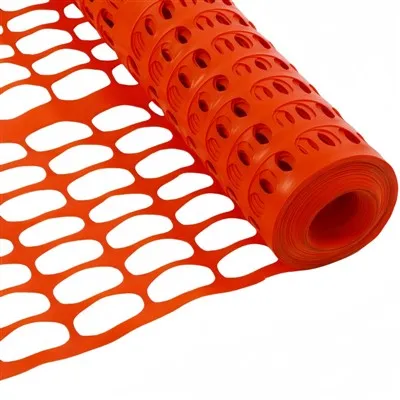
If you’re in the market for an Underground Net, whether it’s for a small – scale project or a large – scale industrial operation, we’re here to help. We’ve got the knowledge and the products to make sure your underground network is up and running smoothly. Don’t hesitate to reach out to us to discuss your requirements and get a customized solution. We’re looking forward to working with you to build the perfect Underground Net for your specific situation.
Plastic Black Garden Fence References:
- ZigBee Alliance Documentation
- LoRa Alliance Technical Papers
- Wi – Fi Alliance Specifications
- Z – Wave Alliance Information Brochures
Shaoxing Yongte Plastics Co., Ltd.
We are one of the most reliable underground net manufacturers and suppliers in China, specialized in providing high quality customized products. We warmly welcome you to wholesale discount underground net for sale here from our factory. Contact us for pricelist and free sample.
Address: INDUSTRIAL PARK, LIZHU TOWN, KEQIAO DISTRICT, SHAOXING CITY, ZHEJIANG PROVINCE
E-mail: support@sxxyongte.com.cn
WebSite: https://www.fenceplastic.com/
