If you’re a wire or cable manufacturer, you already know how non-negotiable flammability testing is. It’s not just a checkbox for regulatory compliance—it’s what keeps your products from becoming a hazard in buildings, cars, or industrial equipment. As a supplier of wire cable flammability testers, I get asked this question every single week: “How long does it take to get test results from one of these machines?” Wire Cable Flammability Tester
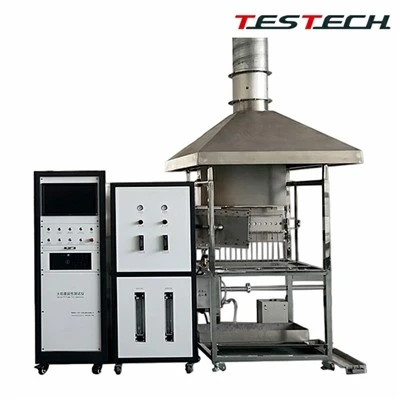
The short answer isn’t as straightforward as you might think. It depends on a handful of factors that I’ve seen trip up new clients and long-time industry veterans alike. Let’s break it down, no fancy jargon, just real talk from someone who’s spent years helping labs, manufacturers, and third-party testing facilities get these machines up and running smoothly.
First, let’s start with the basics: what a standard wire cable flammability test actually entails. Most of the common tests we design our machines for—like the UL 1581 Vertical Wire Test, or the CSA FT1, or even the IEC 60332-1 for single wires—aren’t just a quick burn and done. The test has specific timelines built right into the standard. For example, the UL 1581 VW-1 test requires you to apply a 1255-degree Celsius flame to a 60-inch long wire sample for 15 seconds, then let it burn for another 15 seconds before applying the flame again. You have to do that 5 times in a row for each of 5 samples. Then you wait to see if the flame self-extinguishes before the char reaches a specific mark, and if no dripping ignites cotton below. That entire testing run for 5 samples? That’s about 15 minutes of active time, but the total time from start to final result is around 45 minutes to an hour, just for the test itself.
Wait, but that’s just the test cycle. There’s more before you even hit the “start” button. That’s where the first big delay comes in: sample prep. I recently worked with a small cable manufacturer in Ohio that thought they could run 10 samples in an hour, only to realize their samples were cut 2 inches too short because they didn’t have a proper measuring jig. One client brought in samples with frayed ends, which made the flame spread unpredictably, so they had to recut and start over. For some of the stricter tests—like the IEC 60332-3 for large cables (the one that tests a bundle of wires, not single ones)—sample prep is even more involved. You have to assemble a 2.5-meter bundle of wires, weigh it to make sure it meets the mass requirement, mount it to a specific height, and seal the ends properly. That can take anywhere from 30 minutes to 2 hours, depending on how organized your team is. I always tell clients: if you show up to the testing lab with properly cut, properly prepared samples, you’ll cut your total testing time in half.
Next up: machine calibration and setup. This is non-negotiable for accurate results, but it’s something a lot of new people skip or rush through. Our wire cable flammability testers are designed to be intuitive, but if you don’t calibrate the flame height, the gas pressure, or the sample holder position before every test, your results will be unreliable. Let me give you a real example: a third-party testing firm in Texas bought one of our machines last year and tried to run a test without calibrating. The flame was 10mm too high, so the wire burned way faster than it should have, and they got a “failed” result that turned out to be wrong. They had to re-run the entire test, which cost them a day of delays and a lot of extra work. A full calibration for our machines takes about 10 minutes, but it’s a step that should never be skipped. For clients that run multiple tests a day, we also offer pre-test setup checks that can cut that time down to 2-3 minutes, but even then, it’s part of the overall timeline.
Then there’s the number of samples and test runs you need. If you’re a small manufacturer testing 5 samples for a one-off order, you’re looking at a total of 1-2 hours from start to final report. But if you’re a large OEM testing 50 samples for a new product launch, or running tests for different standards (say, UL 1581 and IEC 60332 at the same time), that timeline adds up fast. I had a client in Detroit last quarter that needed 200 samples tested for a big automotive contract. They ran batches of 5 samples at a time, so that’s 40 test cycles, plus prep and calibration for each batch. Their total testing time was about 2 days, not including time for reviewing and verifying results. That’s another thing: post-test analysis. The machine will log all the data—burn time, self-extinguish time, dripping events—but someone has to go through that data, confirm it meets the standard requirements, and generate a formal report for regulatory purposes. That can take anywhere from 30 minutes for a small batch to a few hours for a large one.
Wait, but what about third-party testing facilities that send samples out? A lot of people ask me: if I send my samples to a lab, how long until I get results back? That’s a whole different timeline, because labs often have backlogs, especially if they’re testing for popular standards. For example, during peak season (like 2-3 months before the NEC update comes out, or big industry trade shows), labs can have a 2-4 week turnaround time, not because the test itself takes long, but because they’re swamped with orders. If you own a wire cable flammability tester and run tests in-house, you can cut that turnaround time down to days, or even hours, depending on your workflow. That’s one of the biggest reasons we sell our machines to manufacturers: they don’t have to wait weeks for lab results to get their product to market.
I also get asked about factors that can slow results down unexpectedly. Let’s talk about sample condition, for example. If your samples are wet, or have residual plasticizers from manufacturing, that can make the flame burn longer, so you have to adjust the test parameters, or re-run the test with new, dry samples. I once had a client that ran tests on samples right after they came off the extrusion line, and the moisture in the insulation made the flame self-extinguish faster than it should have, leading to a wrong pass. They had to wait 24 hours for the samples to dry before re-testing, which delayed their product launch by a day. That’s a common mistake—always let samples acclimate to room temperature and humidity for at least 24 hours before testing, per most standard guidelines.
Another factor: machine downtime. Even the best testers need maintenance, and if you don’t do regular checks, you can have issues mid-test that delay results. Our machines have built-in diagnostic tools that let you catch small issues before they become big problems, like a clogged gas line or a worn sample holder. We recommend doing a quick maintenance check at the start of every week, which takes about 15 minutes, to avoid unexpected downtime. A client in California skipped maintenance once, and their machine shut down mid-test, so they had to order a part that took 3 days to arrive, delaying their results by a whole week. That’s avoidable, trust me.
So let’s wrap this up with a real-world timeline that most of our clients see. If you’re a small to mid-sized manufacturer testing for compliance, running 5 samples for a single standard:
- Sample prep: 30 minutes
- Machine calibration/setup: 10 minutes
- Test cycles (5 samples): 1 hour total test time (active + waiting)
- Post-test analysis and report: 45 minutes
Total time from start to final result: around 2.5 hours. That’s if everything goes perfectly, no delays, no mistakes.
If you’re a large manufacturer or a lab running multiple batches, or testing for different standards, that timeline goes up. For a batch of 50 single wire samples, testing for UL 1581: total time is around 8-10 hours, or split over two work days if needed. For a cable bundle test like IEC 60332-3, each batch of bundles takes about 3 hours, so 10 bundles would be 12-15 hours total.
Now, I know what some of you are thinking: why does it take so long when the test itself is only an hour? Because accuracy matters. These test results aren’t just numbers on a page—they’re what keep your products safe, what keep you compliant with regulations, and what keep your customers trusting your brand. Cutting corners on sample prep, calibration, or review leads to bad results, which lead to product recalls, fines, or lost contracts. That’s why we build our wire cable flammability testers to be both fast and reliable—we don’t rush the process, but we make it as efficient as possible.
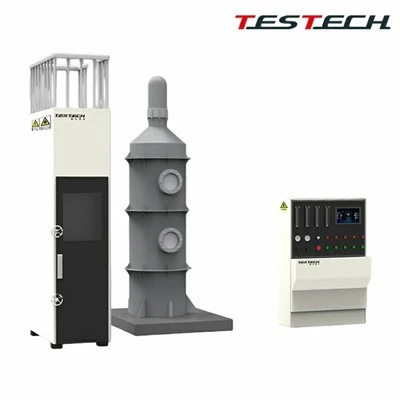
If you’re in the market for a wire cable flammability tester, or you’re looking to upgrade your current setup to speed up test results, hit us up to chat. We don’t do pushy sales pitches, we just help you figure out what machine fits your testing needs, your volume, and your budget. Whether you’re testing 5 samples a month or 500, we can walk you through the timeline, the setup, and how to get the most accurate results as fast as possible. Don’t waste weeks waiting for lab results when you can have your own machine and get results in hours. Reach out to us to start the conversation about finding the right tester for your business.
Fabric Flammability Tester References:
Underwriters Laboratories. UL 1581: Standard for Wire and Cable Fire Tests. 2020.
International Electrotechnical Commission. IEC 60332-1: Tests on Electrical Cables for Vertical Flame Propagation. 2018.
Canadian Standards Association. CSA FT1: Flame Test for Cables and Wires. 2019.
National Fire Protection Association. NFPA 70: National Electrical Code. 2022.
TESTech Instrument (Suzhou) Technologies
TESTech Instrument (Suzhou) Technologies is one of the most reliable wire cable flammability tester manufacturers and suppliers in China. If you’re going to wholesale durable wire cable flammability tester, welcome to get quotation from our factory. For price consultation, contact us.
Address: 8/F, R&D and Production Workshop No. 5, Jiangsu Guoqian Technology Innovation Industrial Park, 168 Lüliangshan Road, Huqiu District, Suzhou, Jiangsu Province, China
E-mail: sales@testech.com.cn
WebSite: https://www.testechfiretest.com/
