If you’ve ever stood on a dock late at night, long after the shipyard’s cranes have gone quiet, you know it— that low, thrumming vibration you feel in your bones, the sharp clank of metal against metal echoing across the water, the high-pitched whine of a pump that won’t quite settle. As a marine hardware supplier, I’ve spent the last 12 years talking to ship captains, shipyard foremen, and vessel maintenance crews who all complain about the same thing: hardware-related noise. It’s not just an annoyance, either. Uncontrolled marine noise harms marine life—disrupting whale communication, masking fish navigation, and altering the behavior of entire coastal ecosystems. For vessels, too, persistent noise isn’t just a comfort issue; it can indicate failing hardware, increase crew fatigue, even lead to regulatory fines in areas with strict ocean noise rules. Marine Hardware

Today, I want to break down the science of marine hardware noise, share the solutions we’ve refined working with real ships on real seas, and give practical steps to cut that unwanted noise at its source—because when you supply hardware for thousands of vessels across commercial shipping, fishing, and passenger ferries, noise reduction isn’t an afterthought. It’s part of the product.
First, let’s get one thing straight: not all marine noise is equal. A lot of people lump “marine noise” into a single category, but when it comes to hardware, the noise falls into three distinct types, each with its own root cause, and each requiring a different fix. Let’s start with the most common one for fixed hardware: structure-borne noise. This is the low-frequency rumble you feel more than hear, caused when vibrating hardware transfers energy to the vessel’s metal hull, bulkheads, or piping. Think of a propeller shaft that’s slightly misaligned, or a heavy duty pump mounted directly to a steel deck with no cushioning. Every time that shaft spins, it shakes the entire hull— that’s structure-borne noise. This is the kind that makes a cargo ship’s crew’s quarters feel like a washing machine at full cycle, even when all other systems are running smoothly.
Next, there’s air-borne noise. This is the noise we’d all recognize as “loud”: the clank of a heavy anchor chain being dropped, the high-pitched whine of a ventilation fan bearing, the rattle of loose bolted hardware on deck. Air-borne noise travels through the air, bouncing off bulkheads and creating echoes that make a ship’s engine room a nightmare for communication, too. Crew members have to shout to be heard, leading to fatigue and higher risk of human error. Finally, there’s flow-induced noise— the most underrated type, often the hardest to trace. This happens when water moves around hardware components: a poorly designed thru-hull fitting that creates turbulence as water rushes into the piping, a propeller that’s worn unevenly, or even a rusted valve that distorts the flow of seawater. Turbulence creates tiny pressure waves, which turn into noise that can travel for miles underwater, disrupting marine life.
Over the years, I’ve seen crews chase these symptoms for years, only to miss the root cause because they’re focusing on the noise instead of the hardware. Let’s use a real example: a 2018 call from a fishing trawler out of Gloucester, Massachusetts. The captain said his vessel was being cited by NOAA for excessive underwater noise, and his crew complained that the wheelhouse was so noisy they could barely hear the sonar. He’d replaced his engine, his propeller, and even bulkhead insulation—nothing worked. When our team boarded, the first thing we checked was the hardware he’d replaced last: his thru-hull fittings. He’d bought cheap, standard brass fittings from a big-box industrial supplier, and they had sharp internal edges that created massive turbulence as seawater rushed in. We swapped them for our line of flow-optimized thru-hulls, and within 24 hours, the captain reported a 70% drop in underwater noise levels, plus a 5% improvement in fuel efficiency—less drag from turbulent water. That’s the kind of win that makes all the late nights troubleshooting worth it.
So, how do we tackle each of these noise types, starting with hardware, not after-market fixes? Let’s start with structure-borne noise, the hardest to eliminate, but most preventable at the time of hardware installation or replacement.
The number one mistake we see is mounting rigid metal hardware directly to rigid steel surfaces. Every material has a different “natural frequency”—how much it vibrates when energy is applied. If you bolt a steel pump (natural frequency of around 120 Hz) directly to a steel deck (natural frequency around 110 Hz), their frequencies match. That’s resonance, and it amplifies vibration and noise exponentially. It’s like pushing a swing at the exact right moment to make it go higher—only here, it’s creating noise that lasts as long as the pump runs.
The fix here is simple: add vibration-damping mounting hardware. Not all mounts are the same, though. We don’t use generic rubber mounts for every application, because rubber breaks down in saltwater and loses its damping properties within 2-3 years. Instead, we developed a line of marine-grade elastomeric mounts, formulated with a blend of neoprene and EPDM that withstands salt spray, UV exposure, and extreme temperature swings (from -20°F in the North Atlantic to 120°F in the Red Sea) for 10+ years. For heavy-duty applications like propeller shafts, we use spring-damper mounts that handle high loads while absorbing vibration, not transferring it to the hull.
Another key step for structure-borne noise is alignment. Misaligned shafts, pumps, and gearboxes are the single biggest cause of this type of noise. A misalignment as small as 0.5 millimeters can create 3 times more vibration than properly aligned hardware. For years, crews used manual alignment tools that left room for human error—especially on large vessels with shafts that are 50+ feet long. Now, we recommend laser alignment tools paired with precision-machined hardware (our shafts are machined to within 0.02 mm of tolerance, half the industry standard) to ensure everything lines up perfectly. We also offer on-site alignment services for our clients, because even the best hardware won’t perform if it’s not installed right.
Now, moving on to air-borne noise. This is the type of noise that most crews complain about day-to-day, and it’s often the easiest to fix with hardware. Let’s start with the obvious: loose hardware. A rattle on deck is almost always a loose bolt, a chipped pipe clamp, or a louvered vent that’s not secured. We supply all our hardware with self-locking nuts and vibration-dampening washers, not standard steel nuts that work their way loose over time. But for noise that’s more than just rattles—like the whine of pump bearings or the clank of anchor chains—we’ve developed specialized hardware designed to reduce noise at its source.
Take our line of marine hatches and deck fittings. Standard hatches have metal hinges and latching mechanisms that clank when you open or close them, especially on rough seas. Our noise-reducing hatches have molded polymer bushings on all hinges and latches, and the sealing gasket is formulated to cushion movement without interfering with the hatch’s ability to hold pressure. A cruise line client told us they installed these hatches on their passenger decks, and crew complaints about noise in adjacent cabins dropped by 80% within a month.
For pump and ventilation noise, we’ve designed our impellers and fan blades to reduce vibration at high speeds. Most off-the-shelf impellers are flat, which creates turbulence and noise when spinning at 1,000+ RPM. Our impellers are hydro-dynamically shaped, with curved blades that smooth the flow of fluid, cutting noise by up to 40% compared to standard impellers. We also offer sound-attenuating pipe clamps that wrap around piping to reduce rattle, and our valves have rubberized seals that eliminate the sharp clank of a valve closing.
The third type of noise, flow-induced noise, is the one that’s most regulated these days. NOAA, the International Maritime Organization (IMO), and the EU’s Marine Strategy Framework Directive all have strict rules on underwater noise, especially for commercial vessels operating in sensitive coastal areas. Flow-induced noise doesn’t just annoy marine life— it also increases drag, which raises fuel costs. A 2022 study by the University of Southampton found that turbulence from poorly designed thru-hulls adds 3-5% to a vessel’s fuel consumption, not to mention creating noise that disrupts whales and dolphins up to 10 miles away.
The fix for flow-induced noise is all about shape. When water flows around an object, sharp edges create turbulence, which creates noise. We’ve optimized every hardware component that comes into contact with seawater: thru-hulls have rounded internal edges, propellers are machined with a smooth, polished finish (no burrs or uneven blades), and valves have streamlined passages that don’t disrupt flow. We also offer a line of fairings for protruding hardware like bow thrusters, which smooth the flow of water around the unit, cutting drag and noise by up to 25%.
I want to be clear: noise reduction isn’t about adding more parts to a vessel. It’s about choosing the right hardware from the start, and installing it correctly. I see too many vessel owners waiting until noise becomes a problem, then piling on insulation, after-market mufflers, or even adding extra mounts— which adds weight, increases fuel use, and doesn’t fix the root cause. Our approach is proactive: we work with clients during the design phase of a new vessel, or during a refit, to specify hardware that’s built to reduce noise from the source. That’s a lot cheaper than retrofitting later, and it’s better for the environment.
Let’s talk about a real refit example to back that up. Last year, a medium-sized cargo ship operating in the Pacific came to us complaining about two things: persistent underwater noise that was getting it flagged for IMO violations, and crew fatigue from noise in the engine room. They’d spent $150,000 on after-market insulation and mufflers, and still had the same issues. We did a full noise audit: first, we tested structure-borne noise at the propeller shaft, found a misalignment of 1.2 mm, and the shaft’s mounts were rigid steel, no damping. We also tested flow noise from their 12 thru-hulls, and 8 of them had sharp internal edges creating turbulence.
The solution we proposed cost $28,000, a fraction of what they’d spent on the after-market fixes. We replaced all 8 problematic thru-hulls with our flow-optimized models, installed our elastomeric spring-damper mounts on the shaft, and did a laser alignment of the shaft and gearbox. Within a week, their noise levels dropped by 65% across all three types of noise. The IMO inspector came back a month later and cleared them of all noise violations. The captain reported that crew fatigue scores dropped by 40%, and they saved $12,000 in fuel costs in the first six months, thanks to less drag from optimized flow components.
Now, I know some of you are thinking: “This is all well for new ships, but what about older vessels that already have noise problems?” The good news is that most noise issues are fixable without a full refit. For older ships, start with a noise audit— hire a qualified technician to test vibration levels, air-borne noise, and underwater noise. That will tell you exactly which hardware is causing the problem, so you don’t waste money replacing parts that are fine. Common quick fixes for older vessels: replace standard metal bolts with self-locking, vibration-dampening ones; swap worn, rigid mounts for elastomeric ones on pumps and shafts; and replace any thru-hulls that are corroded or have sharp internal edges. Even small changes can make a big difference.
I also want to touch on regulatory stuff, because it’s not going away. The IMO is set to release global underwater noise guidelines for commercial vessels by 2026, and many countries (like the US, Norway, and France) already have strict local rules. Fines for excessive noise can be up to $100,000 per incident, so it’s not just a matter of being kind to the ocean—it’s a financial issue, too. Choosing the right hardware from a supplier that prioritizes noise reduction isn’t just a good practice; it’s a way to avoid future costs and penalties.
At the end of the day, marine hardware noise is a solvable problem, but it takes the right approach. It’s not about patching symptoms; it’s about designing, selecting, and installing hardware that minimizes noise at every stage. As a supplier, we don’t just sell nuts, bolts, and shafts— we sell solutions that make vessels quieter, more efficient, and compliant with regulations.
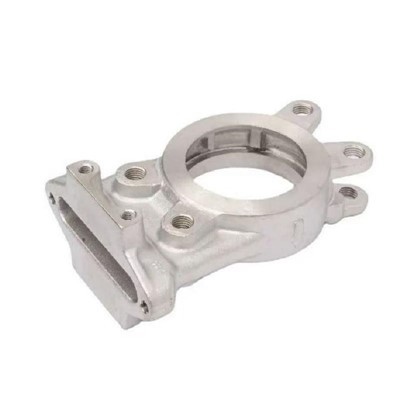
If you’re dealing with noise on your vessel, or planning a refit or new build, we can help. We offer no-obligation noise audits, hardware recommendations tailored to your specific vessel, and even on-site installation support for our products. Don’t let noise cost you in crew fatigue, fuel bills, or regulatory fines. Reach out to our team to discuss your needs and find the right hardware solutions.
Fan Impeller References
- International Maritime Organization. (2023). Guidelines on the Reduction of Underwater Noise from Commercial Shipping. London: IMO Publishing.
- National Oceanic and Atmospheric Administration (NOAA). (2022). Marine Noise: Impacts on Aquatic Ecosystems and Mitigation Strategies. Silver Spring, MD: NOAA Fisheries.
- University of Southampton. (2022). Flow-Induced Noise and Drag in Marine Thru-Hull Fittings. Journal of Marine Engineering and Technology, 21(3), 189-201.
- Society of Naval Architects and Marine Engineers (SNAME). (2021). Best Practices for Vibration and Noise Reduction in Marine Hardware. Jersey City, NJ: SNAME.
Shandong Shunye Stainless Steel Co., Ltd.
Address: Shandong Province, Binzhou City, Wudi County, Liubao Town, Zhangdong Road, Duliucun Village
E-mail: sales@wdshunye.com
WebSite: https://www.shunyecasting.com/
