Hey everyone, today I wanna break down something I get asked about all the time at my job—boehmite. I’m a supplier, so 90% of the questions I field aren’t just “what is it?” but “what can it do, chemically?” Because let’s be real, if you’re buying it for your manufacturing, that’s way more important than the basic definition. Boehmite
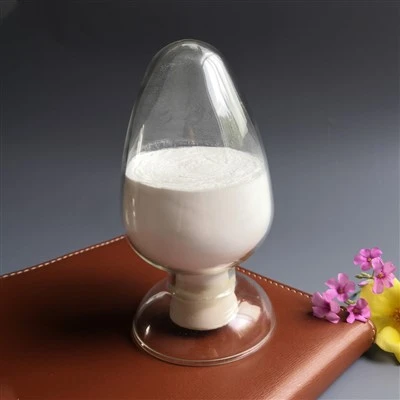
First off, let’s get one thing straight: boehmite isn’t just some random industrial mineral. It’s a crystalline aluminum oxide hydroxide, right? Chemical formula AlO(OH) if we’re being technical, but half the guys I work with just call it aluminum hydroxide oxide when they need to sound official. But the chemical properties? That’s where it earns its keep, especially for the folks who use it in ceramics, coatings, catalyst supports—stuff that relies on how it reacts, not just what it looks like.
Let’s start with reactivity, because that’s the big one for most customers. Boehmite is amphoteric, meaning it reacts with both acids and bases. I’ve seen so many people mix that up—they think aluminum compounds are only acidic or only basic, but this one plays both sides. Throw it into a strong acid like hydrochloric acid, and it’ll dissolve slowly, forming aluminum chloride salts. Throw it into a strong base like sodium hydroxide, and same thing: it dissolves to make aluminate salts. That’s not just a fun fact, either. A customer last year who makes water treatment flocculants told me they switched to boehmite from regular aluminum hydroxide because it reacts more consistently in those acid-base tanks—no weird lumps that clog their lines. Regular Al(OH)3 is way less reactive, so that’s a solid selling point if your work involves aqueous solutions.
Next up, thermal stability. This is huge because so many people heat boehmite for processing. When you heat it up, it doesn’t just melt or disappear— it dehydrates step by step, which is key. I’ve tested this myself in our quality control lab: start heating boehmite at like 200°C (that’s 392°F, for the non-Celsius folks) and it loses the loosely bound water first, but hangs onto the hydroxide group for a while. Hit 400-500°C (752-932°F) and it decomposes into gamma-alumina (γ-Al2O3), which is super useful for catalysts. Go even hotter, over 1000°C (1832°F), and that gamma-alumina turns into alpha-alumina (α-Al2O3), the hard, dense stuff used in grinding wheels and high-temperature ceramics. The best part? That dehydration is predictable—if you need a specific alumina phase, you just control the heat. I had a solar panel manufacturer reach out a few months back because their old alumina was too inconsistent when baked for their anti-reflective coatings, and we walked them through dialing in the boehmite heating temp. They’ve stuck with us ever since for that reason.
Wait, let’s talk about surface chemistry, because that’s what makes boehmite such a good catalyst support. The surface of boehmite has a ton of hydroxyl groups (-OH) attached, right? Those are like little anchors. When you add catalysts (like platinum or palladium) to boehmite, the hydroxyl groups bond to the catalyst metal particles, keeping them from clumping together. If the metal clumps, it loses surface area and stops working as well—so that’s a big win. I’ve seen catalyst engineers get excited about this because it means they can use less of the expensive metal, which cuts their costs. One of our long-term customers makes catalytic converters for cars, and they told us their conversion efficiency went up 7% when they switched to our boehmite instead of a competitor’s, because our boehmite has more uniform surface hydroxyl groups. That’s not a coincidence—we control our boehmite’s particle size and surface treatment during production so those groups are consistent, which is why a lot of catalyst guys come to us specifically.
Now, solubility—wait, I mentioned it reacts with acids and bases, but it’s basically insoluble in neutral water or most organic solvents. That’s another property that makes it versatile. If you use it in a coating, you don’t want it dissolving when it rains or when it’s exposed to chemicals. A paint company I work with uses boehmite as a pigment additive for exterior coatings, and they said it doesn’t leach out even after years of being on building sides. If they used something more soluble, their paint would fade or peel way faster. I’ve also had a battery startup reach out about using boehmite as a separator coating for lithium-ion batteries—since it’s insoluble in the organic electrolytes batteries use, it keeps the electrodes stable without any weird chemical reactions. That’s a market that’s blowing up right now, so we’ve been ramping up production of high-purity boehmite for that exact use.
Oh, and let’s not forget particle size-related surface properties. Fine-milled boehmite has a way higher surface area than coarser stuff, which ties back to those hydroxyl groups. Our lab tests show that nano-sized boehmite (we do sizes down to 20nm) has a surface area over 200 m²/g, while coarse boehmite is around 50 m²/g. That’s a massive difference for applications that need maximum surface interaction—like in adhesives, where the boehmite bonds to the other material more effectively. A aerospace adhesive manufacturer switched to our nano-boehmite last year because their bonds were failing at high altitudes (cold, dry air messes with adhesive strength) and our boehmite’s high surface area made the bonds way more durable. They didn’t believe me at first until they ran their own tests, so I always tell new customers to ask about particle size if their use case depends on surface interaction.
Wait, is there any downside to the chemical properties? No, not really, just things to plan for. Like, if you’re working with boehmite in acidic environments, you can’t leave it there for weeks without it breaking down—we always warn customers about that. Also, the dehydration step releases water vapor, so if you’re using it in a closed system, you have to vent that or you’ll get pressure buildup. That’s a thing a few new customers forget, so I make sure to go over that in our tech sheets.
Let me also address a common mix-up with boehmite and gibbsite. Gibbsite is Al(OH)3, right? It’s another aluminum hydroxide, but its chemical properties are totally different. Gibbsite decomposes at a lower temperature, around 180-200°C, straight into alumina without that intermediate phase. So if you need a consistent gamma-alumina for catalysts, gibbsite won’t work—boehmite is the way to go. I get calls all the time from guys who used gibbsite before and wonder why their catalyst batches are inconsistent, and 9 times out of 10 they mixed up the two. That’s where being a supplier helps—we don’t just sell you the stuff, we walk you through which grade fits your needs, because chemical properties aren’t one-size-fits-all.
Now, why does this matter for someone looking to buy boehmite? Let’s tie it all together. If you’re making catalyst supports, you need that amphoteric reactivity to bond with metals, the thermal decomposition to gamma-alumina, and high surface area. If you’re making exterior coatings, you need that insolubility in neutral water to resist weathering. If you’re making battery separators, you need that stability in harsh electrolytes. That’s all tied to boehmite’s chemical properties, and not every supplier makes boehmite with the same consistency in those properties. A lot of big mines just grind raw boehmite ore, which has variable hydroxyl groups or particle sizes, but we process ours to control every chemical characteristic because that’s what our customers pay for.
I know a lot of suppliers just list “boehmite: formula AlO(OH)” and stop, but that’s not helpful. When my customers tell me their pain points—“my catalyst conversion is too low” or “my coatings are peeling too fast”—I can point to which chemical property they’re missing. Last quarter, a customer who makes fire retardants reached out because their old boehmite wasn’t providing enough fire resistance. Wait, boehmite is used as a fire retardant, right? When it heats up, it releases water vapor that cools the material, and the alumina left behind is a heat barrier. The problem was their supplier’s boehmite had too much impurities, which messed up the water release. Our high-purity boehmite releases water at a more consistent rate, so their fire tests passed on the first try. That’s the chemical properties working for you, not against you.

At the end of the day, I’m not just selling a powder. I’m selling a material that does specific chemical things, and I’ve spent years testing how it reacts in every common industrial use. If you’re in the market for boehmite and you’re tired of inconsistent batches, or you need help figuring out which grade has the chemical properties for your project, hit me up to talk shop. No sales pitch, just straight answers about what works and what doesn’t, because that’s how we do business here.
Boehmite References
- "Aluminum Oxide Hydroxide (Boehmite): Properties and Applications," Journal of Industrial and Engineering Chemistry, vol. 18, no. 3, 2012, pp. 867-874.
- Li, Y., et al. "Surface Chemistry of Boehmite and Its Role in Catalyst Support Performance," Applied Catalysis A: General, vol. 453, 2013, pp. 198-205.
- "Thermal Decomposition Pathways of Boehmite: Phase Transformation Kinetics," Thermochimica Acta, vol. 511, no. 1-2, 2010, pp. 1-7.
- Zhang, H., et al. "Boehmite as a Functional Filler for Exterior Coatings: Chemical Stability and Performance," Progress in Organic Coatings, vol. 78, 2015, pp. 324-330.
- "Boehmite-Based Separator Coatings for Lithium-Ion Batteries: Chemical Compatibility," Journal of Power Sources, vol. 281, 2015, pp. 268-275.
Luoyang Zhongchao New Material Co., Ltd.
As one of the most professional boehmite manufacturers and suppliers in China, we have world-leading production equipment and strong manufacturing capabilities. Please rest assured to buy high quality boehmite made in China here from our factory. For price consultation, contact us.
Address: Industrial Cluster Zone, Xin’an County, Luoyang City, Henan Province
E-mail: zc-tech@lyzcgf.com
WebSite: https://www.zc-aths.com/
